

Higson API: Integrate the Rules Engine with Your Systems
We offer advanced versioning, an intuitive tree structure, and unmatched speed, all within a modern and user-friendly UI.
Two Ways of Connecting
to Higson
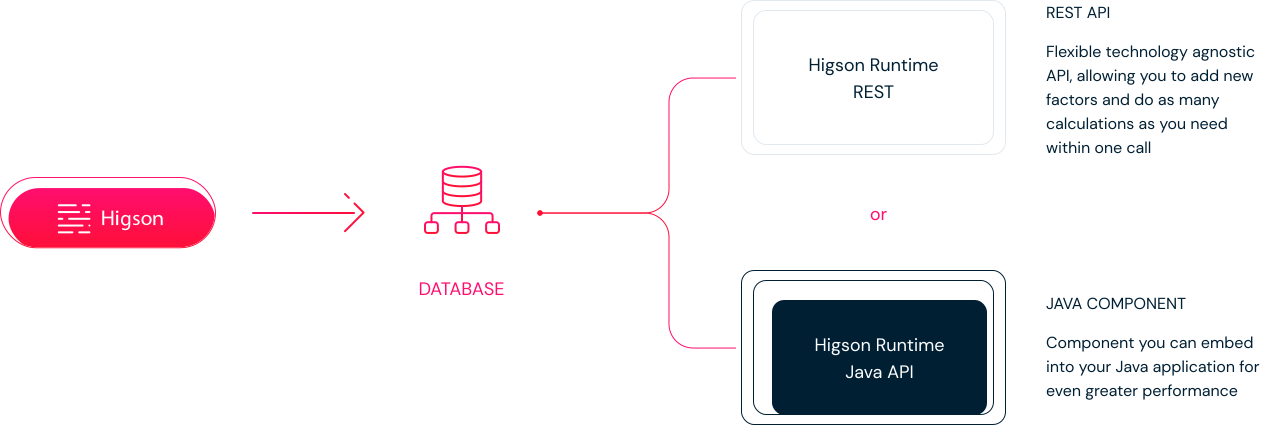
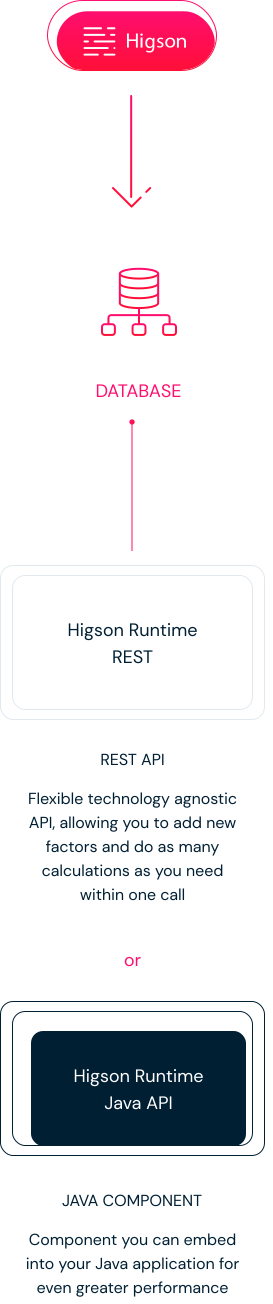
There are two ways of connecting to Higson with REST API or as a Java library.
This page discusses REST API, which can be used from any tech stack. Higson comes with a lightweight yet powerful API that allows you to:



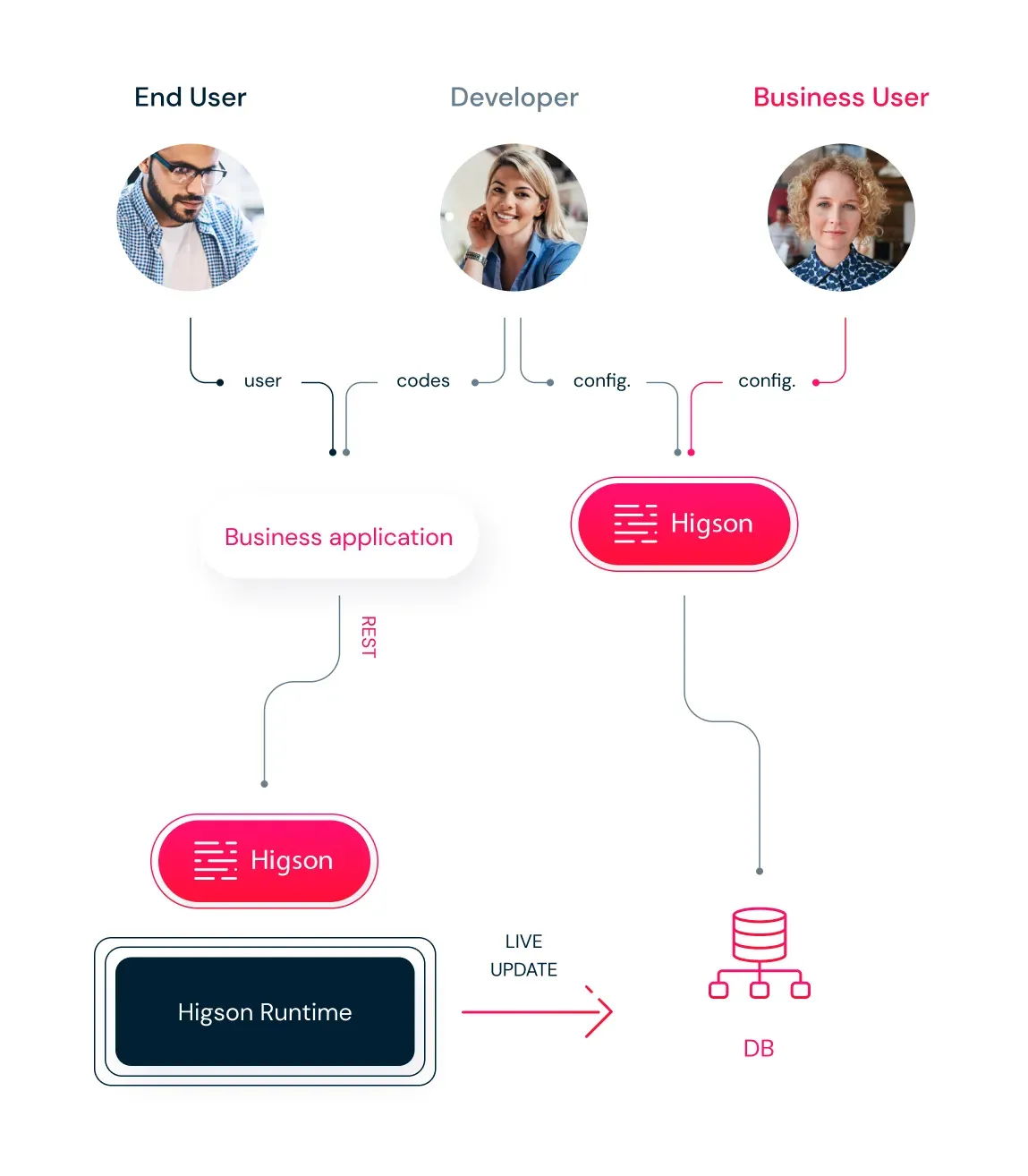
Execution API is a separate component that you could scale up on demand and bring more instances to handle your traffic.
Each call is stateless, so it doesn't matter which instance will serve the request.
Simple Call
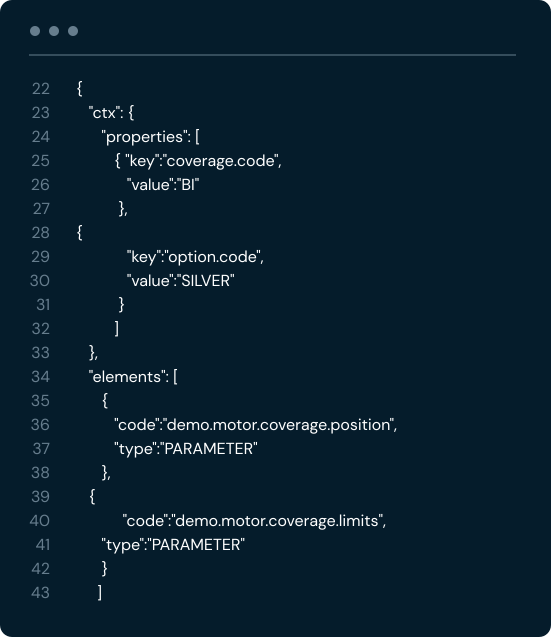
The call consists of two parts:
"ctx"
While decision tables may not seem impressive, they do however perform complex configurations, which is their power - everybody can model decisions using them.
"elements"
The evaluation part of the call. In this part, you point out which rules you would like to evaluate. You can enumerate as many of them as you need to be executed at once.
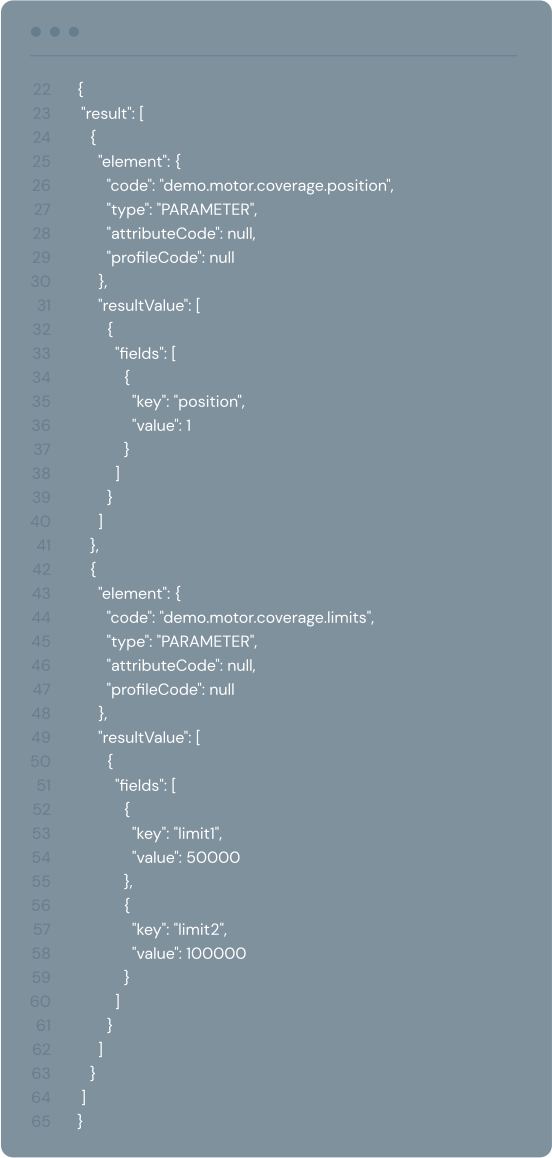
For each element pointed out in the request, Higson will return a separate section.
The designer of the rule decides what will be returned. It could be anything from a simple number, string, array, or more complex object type.
Security
Authentication methods available for REST API:
- basic
- JWT token
The module can be configured to terminate SSL. By default, it is plain HTTP communication because, in most deployments, there is a Load Balancer that also terminates SSL.