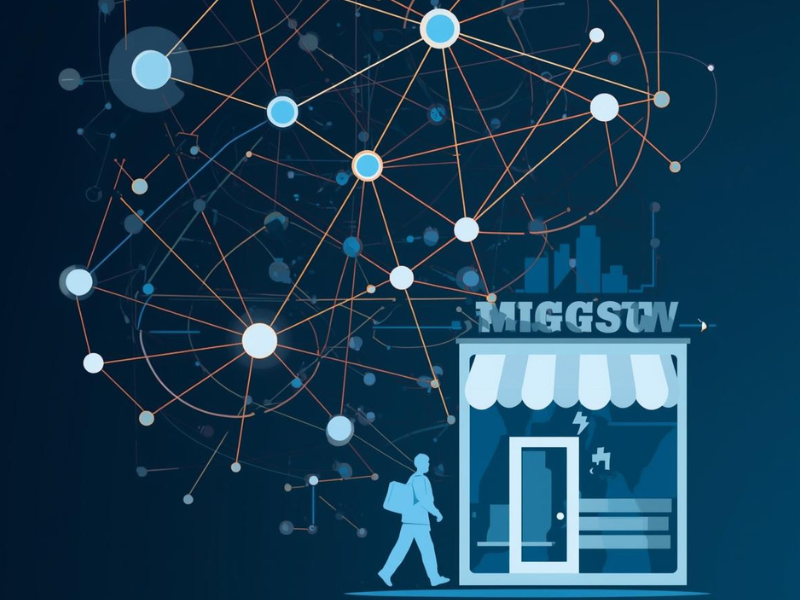
Customer segmentation stands as a pivotal component in the realm of modern marketing, directly influencing campaign success and customer engagement. As highlighted in an article by Salesmanago, businesses utilizing advanced segmentation strategies can achieve up to a 760% increase in revenue. Effective customer segmentation enables businesses to expand their market share, particularly in mature markets where growth opportunities are limited and competition is intense.
At the heart of this paradigm shift is the Business Rules Engine (BRE), a revolutionary technology that refines customer segmentation by leveraging precise, rule-based algorithms.
Customer segmentation can prove useful and guarantee a dominant market position, as shown by the case of PayPal and Venmo. PayPal ventured into the payment market, recognizing a shift towards digital transactions. They targeted a niche, focusing on Millennials who sought an alternative payment method. By identifying potential customers within a mature market, PayPal was able to tailor its value proposition and capture new market share. This led to the creation of Venmo, designed for splitting bills and rideshare costs, epitomizing a strategic move towards a specific, serviceable market.
Why is customer segmentation important in insurance and finance?
Customer segmentation is a critical strategy for businesses aiming to understand and cater to diverse consumer groups. Several reports and articles from McKinsey, Deloitte, and EY highlight its importance:
EY emphasizes that effective customer segmentation is a strategic approach to growth. They illustrate how a global wealth management firm significantly benefitted from understanding client needs and developing a new digital service model through effective segmentation.
Another report from EY discusses the evolution of the consumer experience, moving from a transactional approach to one that builds deep, enriching relationships at every step of the customer journey. This shift requires a sophisticated understanding of consumers, which can be achieved through detailed customer segmentation.
Deloitte highlights the role of customer segmentation in healthcare, stating that it’s essential for targeting messages, using resources efficiently, and designing personalized products and services. This approach varies depending on the type of organization and the data available. The most advanced organizations rely on segmentation as a key element of their consumer strategies.
Deloitte Turkey points out that customer purchasing power is increasing with technological advancements and changing market conditions. Companies need to identify customer needs accurately and provide a value proposition in line with these needs, as the value proposition is a key factor in effective customer segmentation. Recognizing the differences in customers’ needs and expectations is crucial for effective segmentation, which in turn guides channel strategies, new product development, organization structures, pricing approaches, product portfolios, and service levels. Key factors that influence customer segmentation strategies include demographics, behavior, and preferences.
In the dynamic world of insurance and finance, understanding your customers isn’t just a nice-to-have; it’s a must-have. Let’s dive into why customer segmentation is the game-changer these industries need.
The Magic of Data Mining in Understanding Customers
Gone are the days of one-size-fits-all financial services. Studies like those by Namvar, Gholamian, and KhakAbi (2010) have shown how data mining, particularly K-Means clustering, can be a goldmine for customer insights. By clustering customers based on behaviors and transaction data, financial institutions can tailor their services to meet the specific needs of different customer groups.
Note that with Business Rules Engine implemented, data could be categorized and sorted the moment it goes into your CRM, as the rules engine evaluates each data set as it enters the system to ensure accurate segmentation.
The Power of Predictive Analytics
Think of customer lifetime value (LTV) as a crystal ball. Researchers like Khajvand and Tarokh (2011) used LTV to segment banking customers, allowing for predictions about future customer behaviors and preferences. This level of foresight is essential for crafting strategies that resonate with each customer segment.
Personalized Customer Experiences
It's all about making each customer feel special. By segmenting customers, as seen in the work of Zadeh, Faraahi, and Mastali (2011), banks can create personalized experiences that retain existing customers and attract new ones. It's about knowing what makes each customer tick and delivering that.
The Art of Profitability and Retention
Segmentation isn't just about understanding customers; it's about keeping them. Ahuja and Medury (2011) showed how segmentation can help identify the most profitable customers, ensuring that marketing efforts are directed where they count the most.
Tackling Customer Attrition
Last but not least, customer segmentation helps combat customer churn. Studies like Goonetilleke and Caldera's (2013) demonstrate how segmenting customers based on various data points, including demographics and policy details, can help insurance companies anticipate and prevent customer attrition.
In a nutshell, customer segmentation in insurance and finance is like having a roadmap in an unknown city. It guides companies to understand who their customers are, what they want, and how best to serve them. And in an industry where customer loyalty is gold, segmentation is the compass that keeps businesses on the path to success.
Business Rules Engine Overview
A business rules engine is a powerful software system designed to execute business rules in real time, ensuring that operational decisions align with company policies, legal regulations, and strategic objectives. Business rules engines are at the heart of many modern enterprises, enabling businesses to automate and streamline complex decision-making processes. Most business rules engines in use today are forward chaining engines, which can be categorized into production rule engines and reactive rule engines. These engines evaluate data and trigger actions based on predefined business rules, making them essential for organizations seeking agility and precision.
The adoption of business rules engines is on the rise, with the market expected to grow at a steady CAGR of 6.60% over the next five years. Leading companies such as Aviva, Allianz, Bosch, Husqvarna, and Notus leverage business rules engines daily to gain a competitive edge, optimize operations, and respond swiftly to market changes. By integrating rules engines into their software systems, businesses can ensure consistent, transparent, and efficient execution of business logic across various industries.
How Business Rules Work
Business rules engines provide a robust framework for defining, testing, executing, and maintaining business rules independently from application code. This separation allows organizations to adapt quickly to changing requirements without the need for extensive software development. Rules engines typically support a range of features, including the ability to define rules, manage facts, set priorities, enforce mutual exclusion, and establish preconditions for rule execution.
By applying predefined business rules to incoming data, businesses can automate decision-making processes, reducing manual intervention and increasing operational efficiency. Most rule engines offer seamless integration with customer relationship management (CRM) systems, minimizing manual data entry and ensuring that customer information is processed accurately and consistently. Additionally, business rules engines enhance compliance by making business processes transparent and generating detailed audit trails. Compliance officers can easily adjust business decisions in response to evolving regulatory policies, ensuring that the organization remains aligned with internal and external requirements.
The Importance of BRE in Customer Segmentation
Business Rules Engines (BRE) play a pivotal role in enhancing the efficiency and accuracy of customer segmentation. BREs automate decision-making processes based on pre-set business rules, enabling businesses to categorize their customers more effectively and swiftly. This automation is particularly valuable in identifying and responding to the diverse needs and behaviors of different customer groups.
By implementing a rule engine, companies can tailor their marketing strategies and product offerings to align more closely with the specific preferences and requirements of each segment, thereby increasing customer satisfaction and business efficiency. A rule engine enables precise rule processing, which is essential for ensuring compliance with internal policies and external regulations.
The use of BREs in customer segmentation streamlines the process and ensures a high degree of precision in targeting, which is essential for businesses aiming to optimize their marketing efforts and customer engagement strategies. Rule engines play a critical role in ensuring compliance by automating the application of internal policies and maintaining audit trails.
The study on customer segmentation and profiling in the insurance industry, utilizing K-Modes Clustering and Decision Tree Classifier, aligns closely with the application of Business Rules Engines (BRE) in a similar context. BREs can effectively automate and refine the customer segmentation process depicted in the study. By integrating BREs, insurance companies can systematically apply complex rules derived from the insights of data mining techniques like K-Modes Clustering and Decision Trees.
Leveraging Rules Engine for Customer Segmentation in the Insurance Industry
BREs can automate the categorization of customers into segments like “Potential High-Value Customers,” “Low Value Customers,” and “Disinterested Customers” based on predefined criteria. Insurance agents use this segmentation to better understand and serve their customer base, offering customized solutions and improving targeting through insights gained from customer interactions. This automation ensures consistency and efficiency in segmentation, crucial for developing targeted marketing strategies and personalized insurance plans. The use of BREs further enhances decision-making, as seen in the study where the Decision Tree with Gini model achieved an 81.30% accuracy rate. BREs can replicate this by applying similar decision-making logic to customer data, and insurance providers leverage segmentation to tailor their offerings, underwriting processes, and marketing efforts to specific customer segments, improving targeting and personalization. The ability to segment customers enables insurers to develop more effective marketing and retention strategies.
Response to Customer Needs: Tailoring Products and Maximizing Cross-Selling/Up-Selling Opportunities
In the insurance and finance sectors, responding precisely to customer needs isn’t just about service; it’s about strategically tailoring products. With the data-driven insights provided by Business Rules Engines (BRE), companies can now fine-tune their product offerings. This approach isn’t just about meeting customer needs; it’s a powerful tool for identifying cross-selling and up-selling opportunities.
By understanding the target audience and customer segments, firms can present the most relevant products, enhancing the likelihood of customers purchasing additional services. Understanding the target audience allows for more effective cross-selling and up-selling. This method increases revenue and also boosts customer satisfaction, as clients receive offers that genuinely match their needs and preferences.
There are many customer segmentation tools in the market. Segmentation is now easier than ever.
Business Rules Engines are among the best customer segmentation tools, because:
- Automated Decision-Making – BREs streamline complex decision processes with automated, rule-based operations, enhancing efficiency and accuracy.
- Dynamic Rule Application – They offer flexibility to swiftly adapt rules in response to changing business strategies or market conditions.
- Integration Capabilities – BREs seamlessly integrate with existing systems (CRM, customer data platform etc.), augmenting rather than replacing them.
- Consistent Decision Logic – These engines ensure uniform application of business rules, maintaining consistency across customer segmentation.
- Ease of Updating Rules – BREs allow for quick and straightforward updates to business rules, making managing rules and the ability to modify rules quickly essential for adapting to changing customer needs and market conditions, as well as accommodating regulatory changes or strategic shifts.
- Scalability – Designed for scalability, BREs effectively handle increasing volumes of data and complex rule sets.
- Specialization in Business Logic – BREs are specifically tailored to implement intricate business logic, making them ideal for complex segmentation scenarios.
The implementation of Business Rules Engines (BRE) in customer segmentation brings several key benefits.
Enhanced Efficiency and Accuracy
By automating decision-making processes, BREs enable businesses to segment their customers more efficiently and accurately. This leads to more precise targeting and personalized marketing strategies, which are essential for maximizing engagement and conversion rates.
Compliance and Risk Reduction
BREs ensure that segmentation strategies comply with relevant regulations and policies, thereby reducing the risk of non-compliance penalties.
Reduction of Manual Tasks
Automation through BREs significantly reduces the need for manual intervention in the segmentation process, allowing staff to focus on more strategic tasks.
Adaptability to Market Dynamics
BREs can quickly adapt to changing market conditions, enabling businesses to respond rapidly to evolving customer needs and preferences.
Error reduction
BREs could work like Japanese factories implementing poka-yoke methods, that prevent errors from happening by making it impossible to make mistake.
Optimizing revenue
The first thing to do in your company would be to model the most profitable customers based on select criteria like personal data and behavior. Then
correctly implemented BREs can sift through customers based on these criteria. If you wanted, you can present these customers with beneficial offers to encourage them to work with you.
Analogically, your company could avoid insuring customers that are costly.
Marketing Campaigns Optimization
Insurance companies can significantly enhance the effectiveness of their marketing campaigns by adopting a customer-centric approach rooted in customer segmentation. By dividing customers into well-defined segments based on their unique needs, preferences, and behaviors, insurance companies can tailor their products, services, and communications to resonate with each group. This targeted approach not only increases the relevance of marketing campaigns but also drives higher levels of customer engagement and satisfaction.
Customer segmentation enables insurance companies to deliver personalized experiences, fostering stronger customer loyalty and long-term relationships. By leveraging insights from customer surveys and other data sources, insurers can continually refine their marketing strategies, ensuring that each campaign is optimized for maximum impact. Ultimately, a customer-centric strategy built on robust customer segmentation empowers insurance companies to stand out in a competitive market, attract new customers, and retain existing ones.
Business Logic and Decision-Making
Business rules engines are instrumental in automating business logic and supporting complex decision-making processes. Most business rules engines are designed to execute intricate business rules, manage workflows, and streamline decision processes across the organization. These engines are often integrated into a business rule management system (BRMS), which provides a centralized platform for registering, defining, classifying, and managing business rules.
Rule management within a BRMS allows organizations to define relationships between rules, link them to IT applications, and ensure consistency and compliance throughout the business. One of the key advantages of business rules engines is their ability to empower business users—especially non-technical staff—to manage critical processes and intellectual property without the need for coding expertise. This capability dramatically reduces the time required to implement changes, enabling businesses to respond to market shifts and regulatory updates in a matter of minutes rather than months.
Stakeholders and Business Users Empowerment
Modern rule engines, such as Higson, are designed to empower stakeholders and business users by allowing them to modify business logic without altering application code. This flexibility means that non-technical users can manage rules directly, streamlining the process of updating business policies and accelerating the launch of new products and services. Business rules engines provide a user-friendly interface for rule definition and management, making it easy for business users to participate actively in decision-making processes.
By enabling faster and more efficient rule management, most rule engines help organizations improve customer satisfaction and retention. Business users can quickly adapt to changing customer needs, regulatory requirements, and market conditions, ensuring that the business remains agile and responsive. This empowerment not only enhances customer experience but also drives business growth by fostering innovation and reducing time to market for new offerings.
Conclusion
the effectiveness of customer segmentation analysis in tailoring marketing campaigns and understanding customer behavior cannot be overstated. By employing the best customer segmentation tool, businesses can delve into specific customer segments, allowing for a more nuanced approach in their marketing strategies. Regular customer segmentation analysis is essential not just for acquiring new clients, but also for customer retention, ensuring that the evolving needs and preferences of customers are consistently met. This approach ultimately leads to a deeper understanding of customer behavior, fostering the development of more effective marketing campaigns and strategies aimed at both retaining existing customers and attracting new ones. Such detailed segmentation and analysis are key to maintaining a competitive edge in today's dynamic market.

Take Full Control of Your Product Logic
We provide fee Proof Of Concept, so you can see how Higson can work with your individual business logic.


.png)